Drought and Trees in 2026
Will my trees recover from the drought this summer?
After the record breaking drought and intense heatwaves this summer, many of you may be looking at your trees and wondering if they will ever recover. It is often difficult to tell if you are looking at signs of heat stress, early senescence (as trees slow down in autumn), or something a bit worse.
The important thing is not to despair. Although this summer has been incredibly tough for many plants, and there will be some fatalities, trees are usually highly resilient and will often surprise you by springing back to life the following spring.
Here are some of the issues we are having with saplings at the Stump Nursery and that you may be experiencing at home:
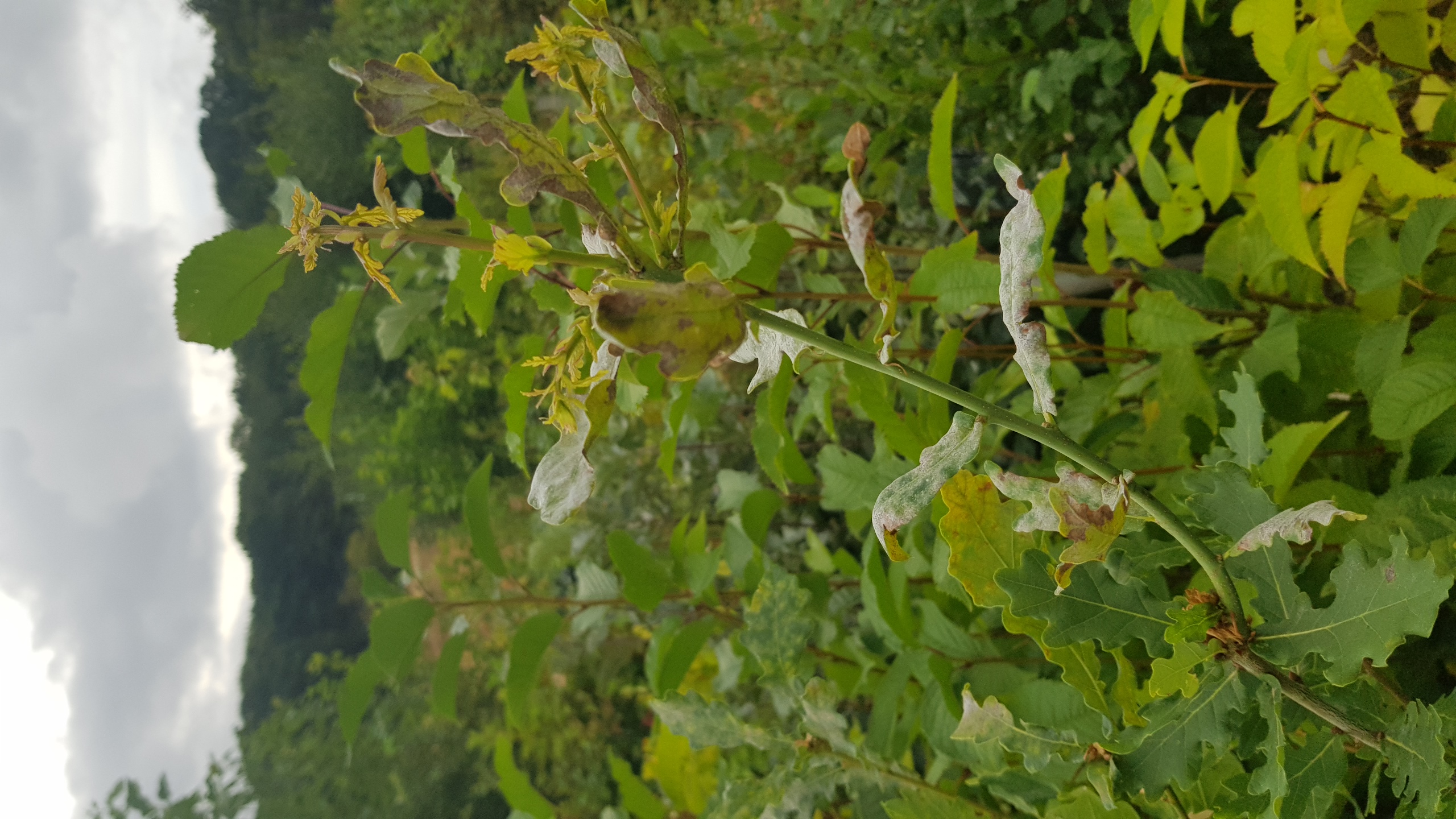
Oak saplings at the Stump Nursery with powdery mildew.
This is a common sign of heat stress for many plant species. It is caused by fungal spores and these favour times of high humidity, particularly when there is a significant difference between day and night-time temperatures. However, the majority of these spores are species-specific, so just because the oaks are affected, we do not worry that this will infect other species. We have found that the some of the oaks at the nursery are prone to powdery mildew in late summer every year and tend to recover well with more consistently cool and wet weather in autumn. Increased air flow from breezier weather will also help reduce many types of fungal diseases.
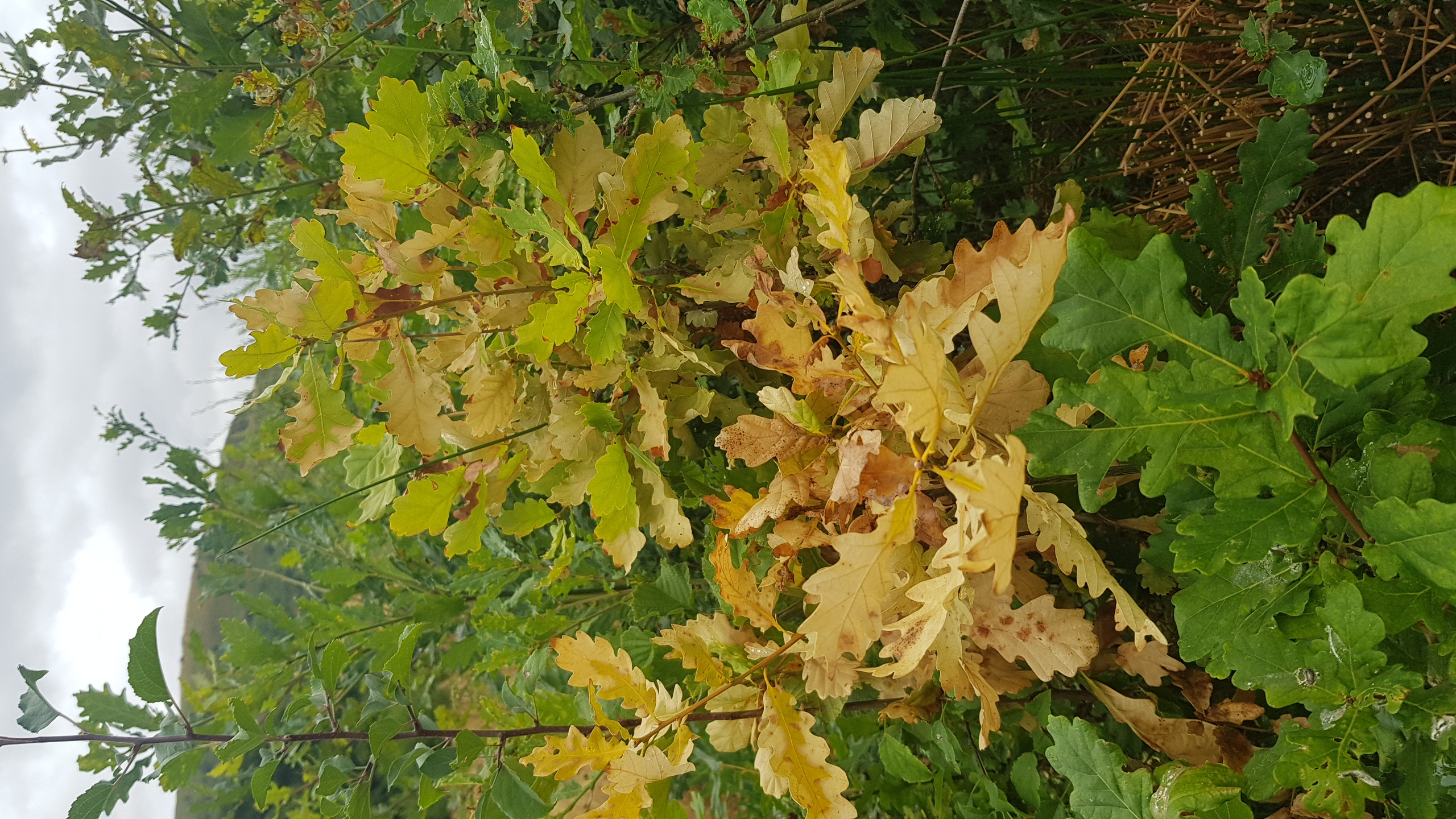
Oak Saplings scorched by the heat at the Stump Nursery;
a sign of heat stress, but the trees should be able to drop these leaves this autumn and regrow fresh leaves in September/October or in the spring. On larger trees or shrubs, we often cut back the damaged branches with a pair of secateurs and find new growth re-emerging from the base. This is particularly true of species which prefer the dappled shade of woodland or heat sensitive species like Rowan that are better adapted to the lower temperatures of the uplands.
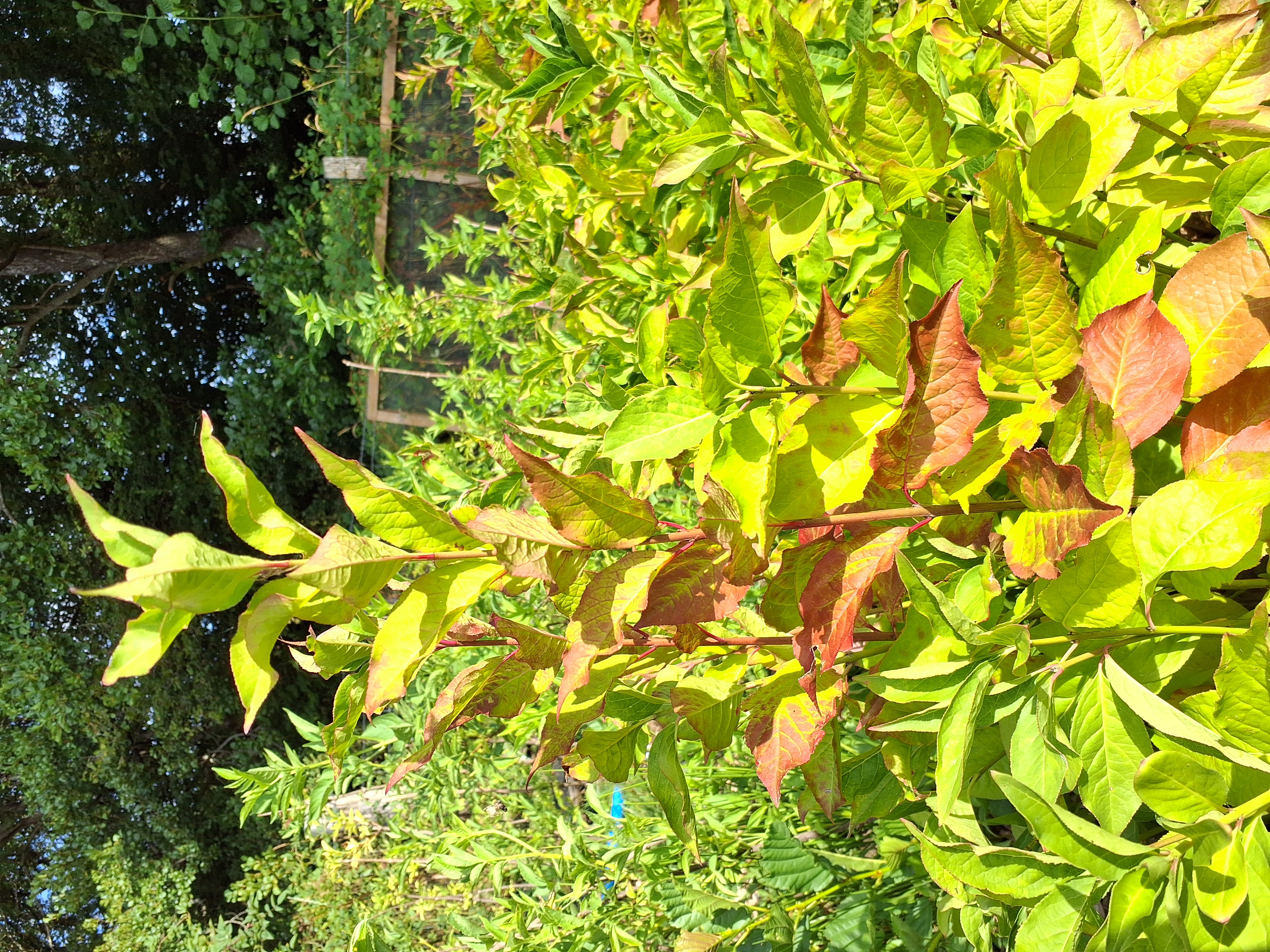
Even though it is only mid-August, some species like Guelder Rose and Spindle are changing colour already. Many plants will respond to heat stress by moving into autumn a bit earlier. This is not usually a problem, and these saplings all look healthy otherwise. Some stressed trees may start dropping their leaves earlier than normal, particularly if the leaves are brown already. This is a sign of heat stress and can help the tree to reduce demand for water.
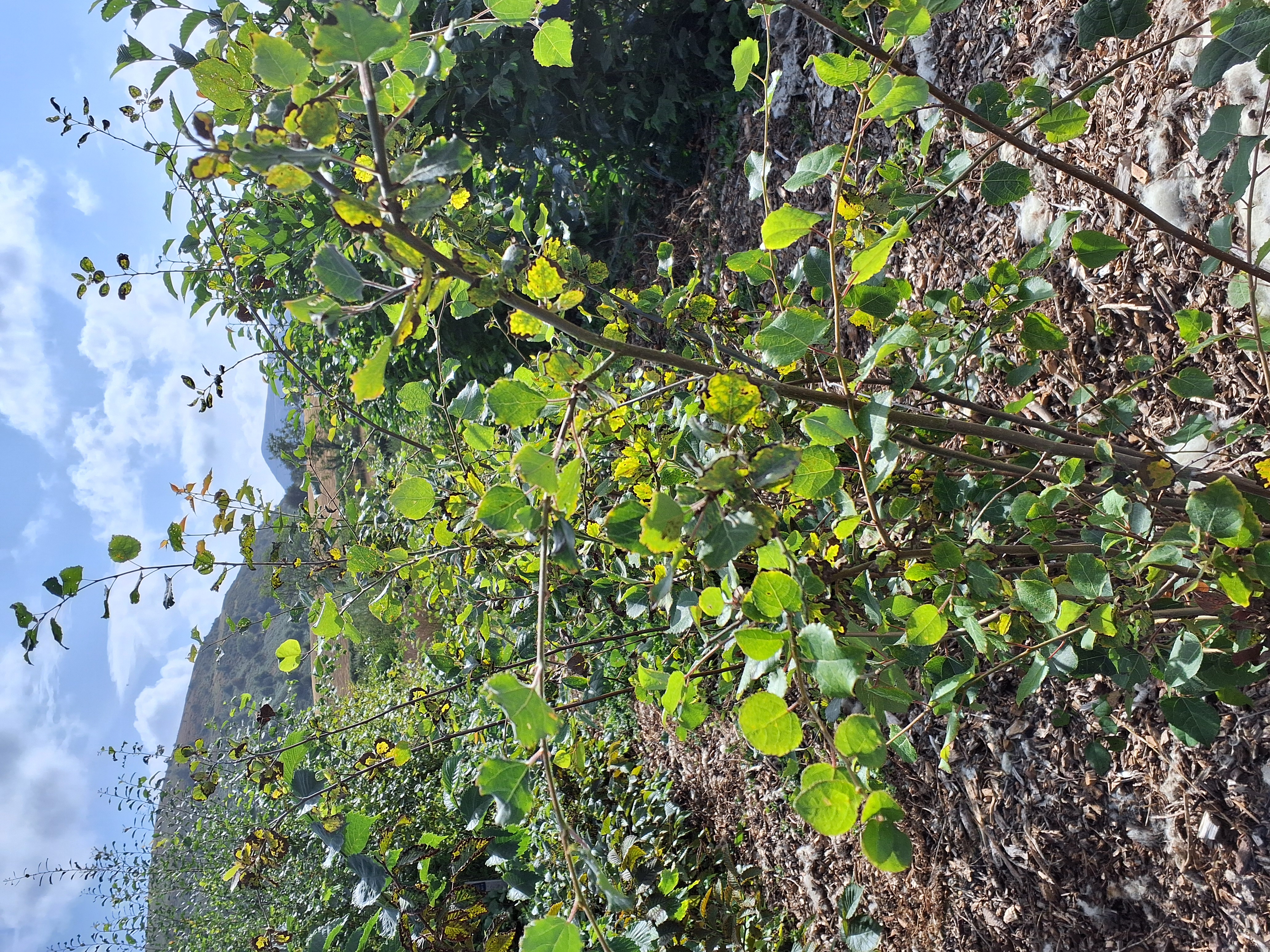
Some of the species at the nursery, such as Aspen in the photo, prefer much wetter and cooler conditions. Despite being irrigated, they have tended to look at bit frazzled all summer (see the older leaves with burnt edges). However, they are well- adapted to being able to lose branches, either by being coppiced by humans or browsed by herbivores, and to reshoot when conditions improve.
The key thing for many trees, especially smaller saplings, will be to wait and observe what happens next year. Hopefully many make a full recovery after rainfall this winter. It is worth leaving plants in the ground until next spring, particularly with new hedgerows and shelterbelts, so an accurate success rate can be assessed.